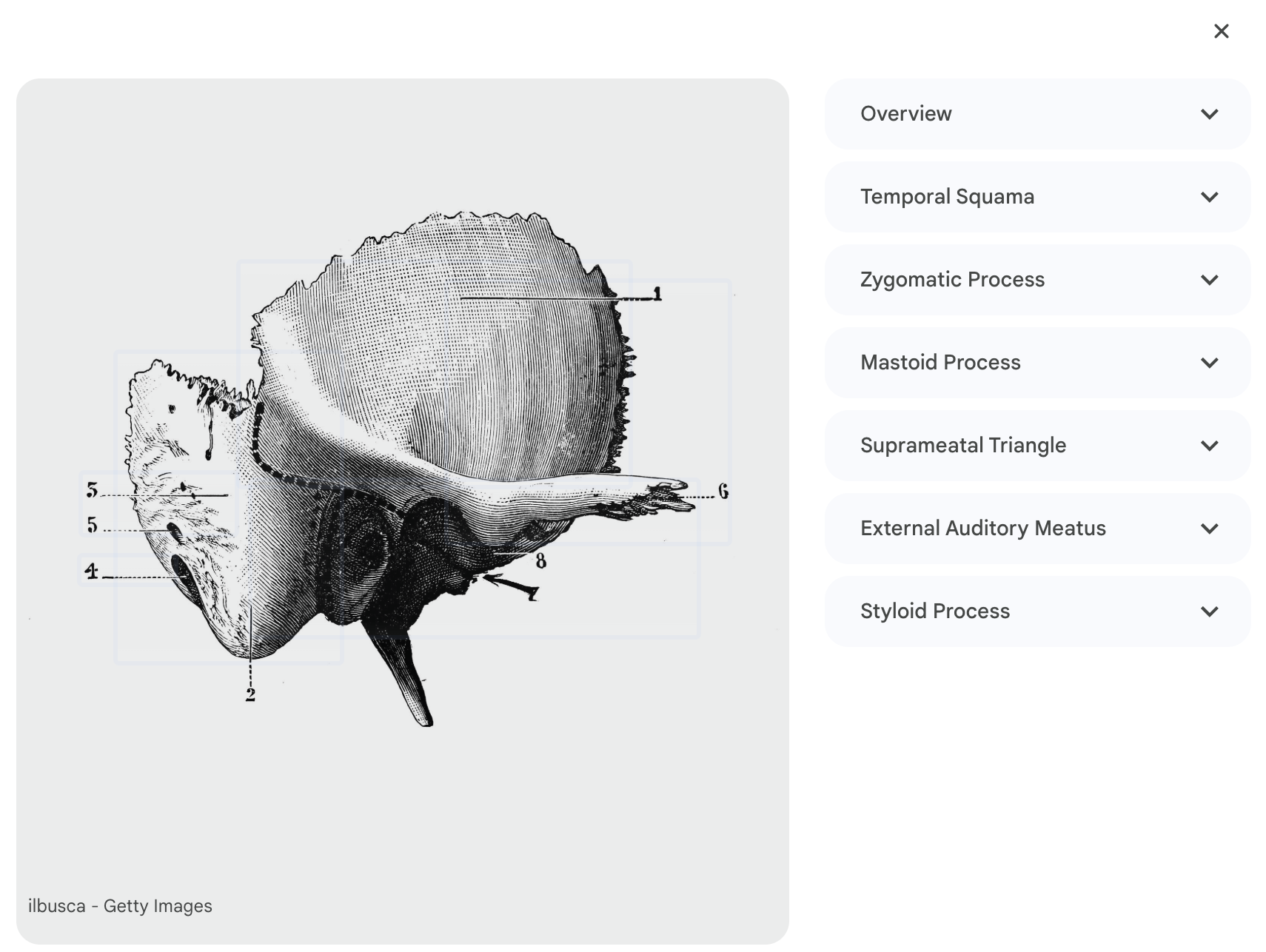
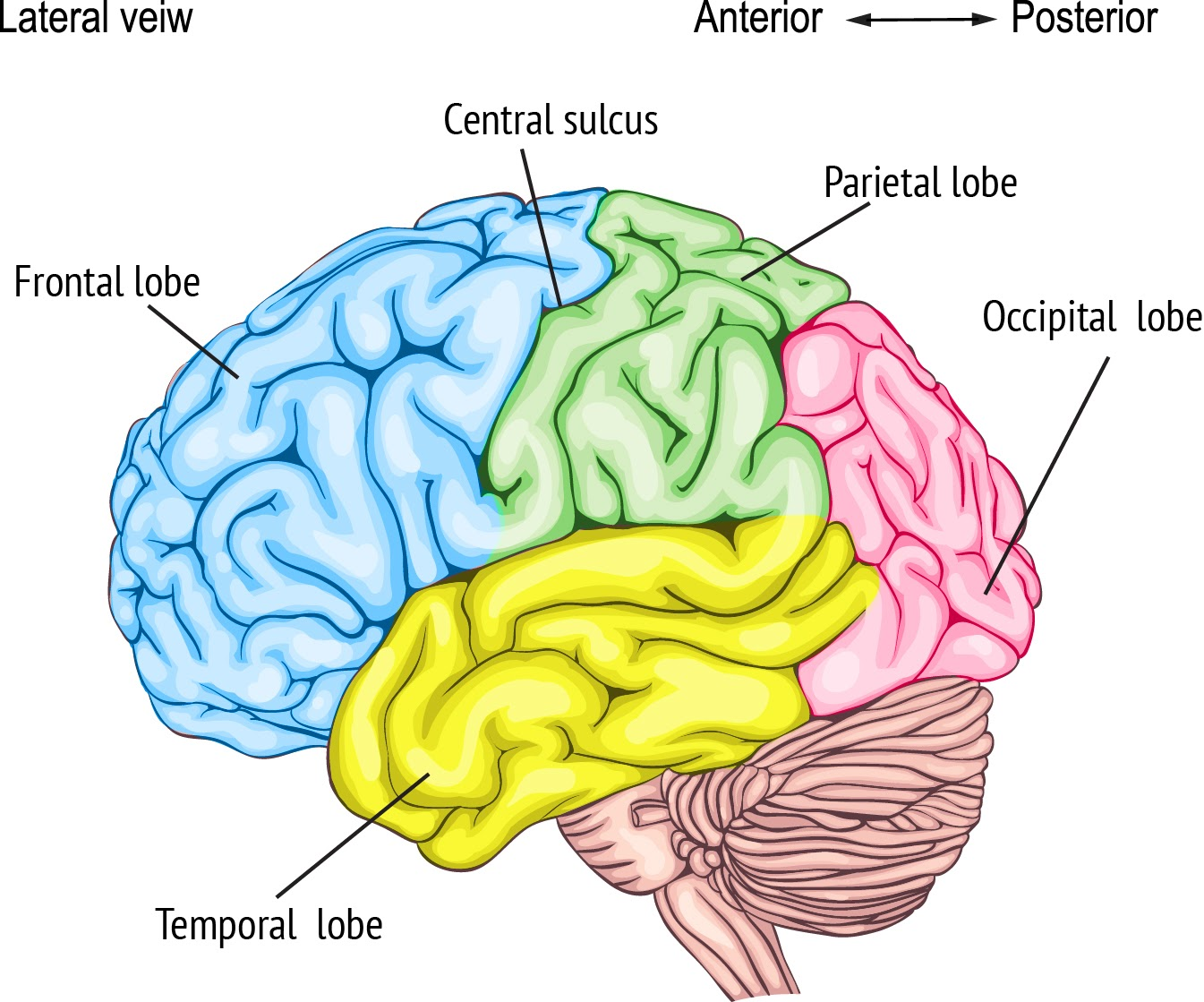
In medical terminology and anatomy, temporal is a regional descriptor referring to the lateral aspect of the skull (the temples). Because it is a topographical term, it modifies several distinct anatomical structures that require high specificity in medical coding:
The Temporal Bone: A complex bilateral bone at the base and sides of the skull that houses the structures of the middle and inner ear (hearing and equilibrium). It consists of the squamous, tympanic, mastoid, and petrous parts.
The Temporal Lobe: The region of the cerebral cortex located inferior to the lateral fissure, primarily responsible for processing auditory information, memory acquisition (hippocampus), and emotional regulation (amygdala).
The Temporal Artery: A major superficial artery of the head, branching from the external carotid artery, highly relevant in rheumatologic conditions like Giant Cell Arteritis.
latin - Latin Root:tempus (plural tempora), meaning “the temples of the head.” Interestingly, tempus also translates to “time.” Classical anatomists believed the temples were the first place where the passage of time manifested (via graying hair), or alternatively, that a blow to this fragile area of the skull was the fastest way to end a person’s “time” (life).
Suffix:-al (from Latin -alis), meaning “pertaining to.”
Literal Meaning: “Pertaining to the temples.”
Coding & Documentation Nuances
ICD-10-CM: Laterality is paramount. Conditions involving the temporal region almost always require specifying right, left, or bilateral.
Examples: S02.1- (Fracture of base of skull, including temporal bone), G40.0- (Localization-related (focal) (partial) idiopathic epilepsy and epileptic syndromes with seizures of localized onset [temporal lobe]), M31.6 (Other giant cell arteritis / Temporal arteritis).
ICD-10-PCS: The term “temporal” does not usually appear as an independent body part in PCS. The coder must translate the anatomy.
Brain: Coded to “Cerebral Hemisphere” (Central Nervous System). A partial temporal lobectomy is coded to Root Operation: Excision (cutting out or off, without replacement, a portion of a body part), whereas removing the entire hemisphere would be Resection.
Bone: Coded to “Skull” (Head and Facial Bones).
Artery: Coded to “External Carotid Artery” or its branches.
CPT: Procedure codes are often specific to the structure. For example, CPT 37609 denotes a temporal artery biopsy (often unilateral; modifier -50 needed for bilateral). Cranial procedures require identifying the approach, such as a “temporal craniotomy” or “infratemporal approach” to skull base lesions.
Related Terms & Differentials
Parietal: Pertaining to the bones or brain lobes located superior and posterior to the temporal region. Differential: Codes for parietal injuries/lobectomies map to different specific cerebral or cranial pathways than temporal ones.
Mastoid: Pertaining specifically to the nipple-like downward projection of the temporal bone. Differential: While technically part of the temporal bone, conditions like mastoiditis (H70.-) and procedures like mastoidectomy have entirely distinct CPT and ICD-10 codes due to their relationship with the middle ear.
Sphenoid: A butterfly-shaped bone at the anterior base of the skull. Differential: Often forms a junction with the temporal bone, but requires different coding, especially in endoscopic sinus surgeries or transsphenoidalhypophysectomies.
Temporomandibular: Pertaining to the joint (TMJ) between the temporal bone and the mandible. Differential: Coded specifically under musculoskeletal or dental/maxillofacial sections, distinct from pure temporal bone pathology.
Occipital: Pertaining to the back of the head/skull. Differential: Houses the visual cortex; completely different functional and diagnostic pathways from the temporal lobe’s auditory/memory functions.
 Crystal's Coder Hub