 Crystal's Coder Hub
🧠 CPT 61590 — Infratemporal Post-Auricular Approach To Midline Skull Base
Quick Reference
wRVU: 47.16 | Global Period: 090 (90 days) | Assistant Payable: ✅ Yes | Bilateral Indicator: 0
📋 Clinical Description
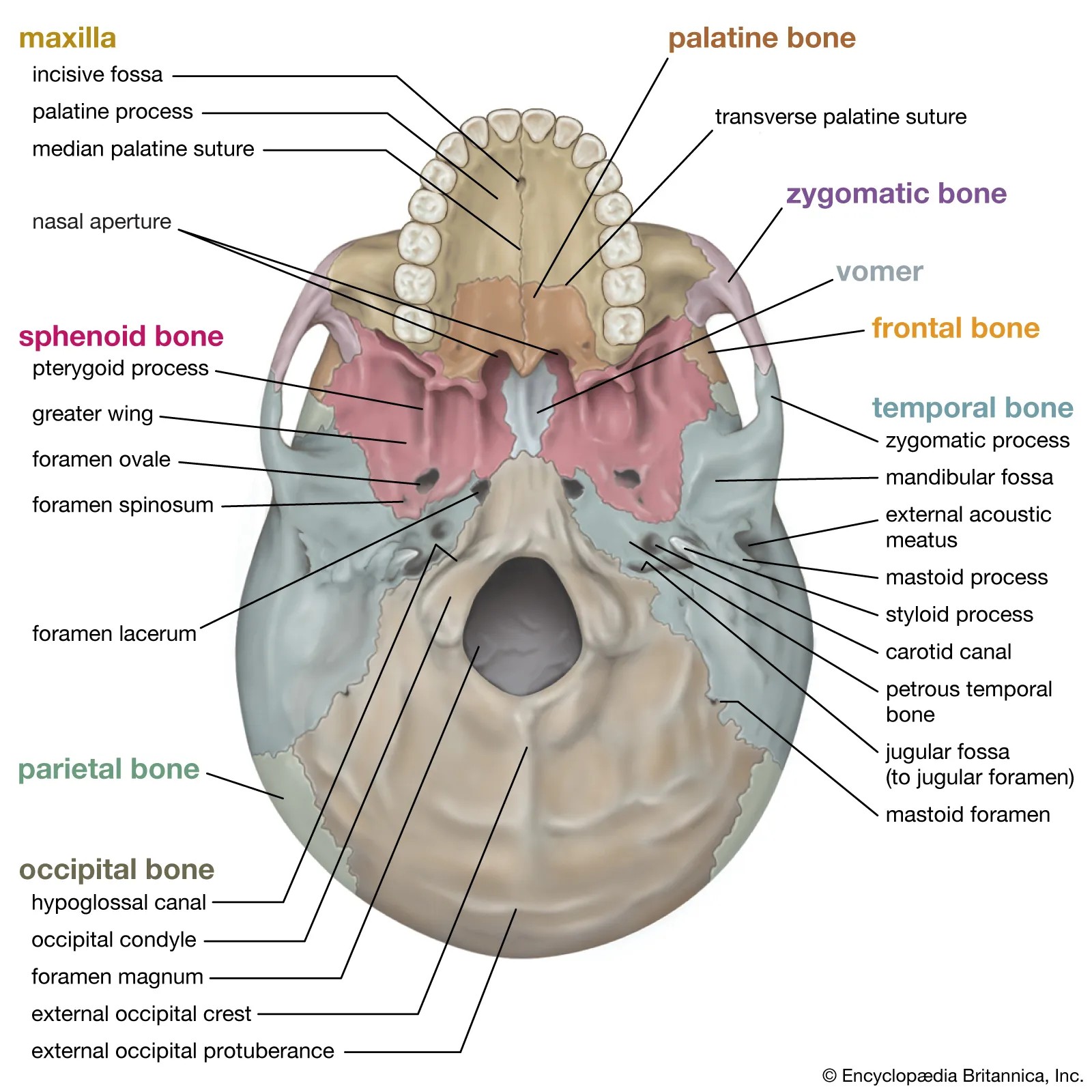
CPT 61590 describes the infratemporal post-auricular approach, a highly complex surgical pathway used to reach the midline skull base. The surgeon makes an incision behind the ear, performs a mastoidectomy to remove the bony air cells, and may resect the sigmoid sinus or mobilize the facial nerve to gain sufficient visibility. This code represents the approach only; it does not include the actual resection of a tumor or the repair of a lesion, which must be coded separately. It is distinguished from 61591 (transcochlear approach) and 61592 (orbitocranial approach) by the specific anatomical landmarks—specifically the petrous apex and clivus—and the post-auricular entry point.
Acoustic Neuroma (Vestibular Schwannoma) is a benign, slow-growing tumor that develops on the eighth cranial nerve. As it grows, it compresses the hearing and balance nerves, and eventually the brainstem, which can lead to life-threatening hydrocephalus or neurological deficit. When the tumor reaches a size that threatens the midline structures or the brainstem, a skull base approach like 61590 is required for safe visualization.
This procedure may be performed in the following clinical contexts:
- Large Acoustic Neuroma — Used when the tumor has significant extension into the cerebellopontine angle and requires a wide exposure.
- Petrous Apex Lesions — Accessing cholesterol granulomas or inflammatory lesions located in the deepest part of the temporal bone.
- Clivus Tumors — Reaching chordomas or meningiomas located on the bony slope behind the nasopharynx.
- Infratemporal Fossa Tumors — Accessing tumors that bridge the neck and the skull base, often involving the carotid artery.
- Sigmoid Sinus Resection — Required when a lesion or tumor has invaded the major venous drainage of the brain.
🔬 Anatomical & Procedural Considerations
| Modality/Approach Variant | Mechanism or Steps | Key clinical or coding notes |
|---|---|---|
| Post-auricular Incision | Curved incision behind the pinna extending toward the neck. | Documentation must detail the dissection through the soft tissues. |
| Mastoidectomy | High-speed drilling to remove the mastoid process of the temporal bone. | Included in 61590; do not report 69601 separately. |
| Facial Nerve Mobilization | Moving the VIIth cranial nerve out of its bony canal (Fallopian canal). | Often necessary for visibility; included in 61590. |
Clinical Pearl
In professional fee (profee) coding, 61590 is frequently a “team surgery” code. An Otolaryngologist (ENT) often performs the approach (61590), while a Neurosurgeon performs the definitive resection (e.g., 61605). When both surgeons work together, both append Modifier -62. If one surgeon performs both the approach and the definitive procedure, they report both codes without Modifier -62, but 61590 is subject to the multiple procedure discount.
✅ Procedure Includes
- Pre-procedure neurological assessment
- General anesthesia (usually provided by a separate anesthesiologist)
- Post-auricular incision and soft tissue dissection
- mastoidectomy and bone removal
- Resection of sigmoid sinus (if performed)
- Mobilization of the facial nerve or contents of the auditory canal
- Intraoperative monitoring setup (though actual monitoring 95940/95941 is billed separately)
❌ Excludes / Do Not Report Together
| Code | Description | Relationship to 61590 |
|---|---|---|
| 69601 | Revision mastoidectomy | Bundled; 61590 includes mastoidectomy as part of the surgical exposure. |
| 61600-61616 | Definitive skull base procedures | Separately reportable; these represent the “work” done once the approach is finished. |
| 61580-61586 | Anterior cranial fossa approaches | Mutually exclusive; these use a different anatomical pathway (frontal/orbital). |
| E/M codes | Office visit, any level | Separately reportable only when modifier -25 is used for a separate diagnosis. |
Bundling Alert — Global Period is 090, Not 000
This is a major surgical procedure. The 90-day global period includes all routine follow-up care, including stitch removal, wound checks, and routine neurological status updates. Any E/M visit within 90 days must be unrelated to the skull base surgery and documented with Modifier -24 to be considered for payment.
🌳 Code Tree — Surgery: Skull Base
CPT 61580-61619 Skull Base Surgery
│
├── 61580-61598 Approach Procedures
│   ├── 61580  Craniofacial approach to anterior cranial fossa
│   ├── 61584  Orbitocranial approach to anterior cranial fossa
│   ├── 61590  **Infratemporal post-auricular approach to midline skull base** (Global: 090)
│   ├── ▶▶ 61590 ◀◀  **YOU ARE HERE**
│   └── 61591  Infratemporal transtemporal approach to midline skull base (Global: 090)
│
└── 61600-61616 Definitive Procedures
    ├── 61605  Resection or excision of neoplastic, vascular or infectious lesion of infratemporal fossa
    └── 61616  Resection or excision of neoplastic, vascular or infectious lesion of base of posterior cranial fossa
💰 RVU & Reimbursement Profile
| Component | Value |
|---|---|
| Work RVU (wRVU) | 47.16 |
| Global Period | 090 |
| Bilateral Indicator | 0 (Unilateral) |
| Assistant Surgeon | ✅ Payable |
| Co-Surgeon | ✅ Applicable (Modifier -62) |
| Team Surgery | ✅ Applicable |
| PC/TC Split | 0 - Procedure Code Only |
| Modifier -51 Exempt | No |
| Anesthesia | General Endotracheal Anesthesia (GETA) |
Bilateral Billing Rules
CPT 61590 has a bilateral indicator of 0. This procedure is inherently unilateral as it describes an approach to one side of the midline. If a rare scenario required a bilateral approach in the same session, it would be reported as two units with Modifier -50, though this is clinically atypical for skull base surgery.
🏷️ Modifier Reference
| Modifier | Name | When to Apply |
|---|---|---|
| -62 | Co-Surgery | Required when an ENT performs the approach and a Neurosurgeon performs the definitive procedure. |
| -RT/-LT | Laterality | Indicates which side of the skull base is being approached. |
| -80 | Assistant Surgeon | Applied when a second surgeon (of the same specialty) assists the primary surgeon. |
| -25 | Separately Identifiable E/M | Applied to an E/M on the day of surgery for a separate medical issue (e.g., managing the patient’s diabetes). |
| -58 | Staged Procedure | Use if the approach is performed on Day 1 and the resection is planned for Day 2. |
🩺 Common ICD-10-CM Pairings
Benign Neoplasms of Cranial Nerves & Meninges
| ICD-10 Code | Description | HCC? | Clinical Notes |
|---|---|---|---|
| D33.3 | Benign neoplasm of cranial nerves | ❌ No | Acoustic Neuroma, Trigeminal Schwannoma. |
| D32.0 | Benign neoplasm of cerebral meninges | ❌ No | Skull base meningioma. |
| C71.9 | Malignant neoplasm of brain, unspecified | ✅ HCC 10 | Primary malignant brain tumor. |
Coding Specificity Reminder
When coding for skull base lesions, ensure the laterality is captured in the ICD-10 code where available. For benign neoplasms of the cranial nerves (D33.3), the code is currently non-specific for laterality, but the CPT code must reflect the side via -RT or -LT.
🏥 MS-DRG Considerations (Inpatient)
Inpatient Coding Reminder
CPT 61590 is performed exclusively in the inpatient setting. It drives the assignment to MDC 01. When paired with a definitive procedure (resection), it typically groups to DRG 023 if the patient has Major Complications or Comorbidities (MCC) or DRG 024 for cases with CC.
🔧 ICD-10-PCS Equivalents (Inpatient Facility Coding)
Note
In the inpatient facility (hospital) setting, the approach is rarely coded as a separate “approach” code. Instead, the focus is on the root operation of the definitive procedure (Excision or Resection). However, the mastoidectomy portion of the approach maps to Excision of the Temporal Bone.
| PCS Code | Full Description | Applicable Modality |
|---|---|---|
| 0NBH0ZZ | Excision of Temporal Bone, Right, Open Approach | Mastoidectomy component. |
| 0NBJ0ZZ | Excision of Temporal Bone, Left, Open Approach | Mastoidectomy component. |
PCS Character Analysis — 0NBH0ZZ
- Section: 0 (Medical and Surgical)
- Body System: N (Head and Facial Bones)
- Root Operation: B (Excision - cutting out or off, without replacement, a portion of a body part)
- Body Part: H (Temporal Bone, Right)
- Approach: 0 (Open)
- Device: Z (No Device)
- Qualifier: Z (No Qualifier)
📝 Coding Examples
Example 1 — Inpatient: Co-Surgery for Acoustic Neuroma
Clinical Scenario: A 44-year-old female with a 4cm left-sided vestibular schwannoma involving the petrous apex. Dr. A (ENT) performs an infratemporal post-auricular approach, including a full mastoidectomy and mobilization of the facial nerve. Dr. B (Neurosurgeon) then resects the lesion. Both surgeons are present for the entire case.
| Field | Code | Rationale |
|---|---|---|
| CPT (ENT) | 61590-62-LT | Approach performed by ENT; -62 for co-surgery. |
| CPT (NSG) | 61616-62-LT | Resection of posterior fossa lesion; -62 for co-surgery. |
| PDx | D33.3 | Benign neoplasm of cranial nerves. |
Example 2 — Inpatient: Single Surgeon Total Procedure
Clinical Scenario: A neurosurgeon performs both the approach and the definitive resection of a clivus chordoma.
| Field | Code | Rationale |
|---|---|---|
| CPT 1 | 61607-RT | Resection of clivus lesion (Primary procedure). |
| CPT 2 | 61590-51-RT | Approach code; -51 for multiple procedures. |
| PDx | C71.9 | Malignant neoplasm of brain (Chordoma). |
⚠️ Common Coding Pitfalls
- Reporting Mastoidectomy Separately: Do not report 69601 with 61590. The mastoidectomy is considered the “portal” for the approach and is included in the wRVU for 61590.
- Missing Modifier -62: If two surgeons of different specialties work together on a skull base case, they MUST both use Modifier -62 on the approach AND the definitive code. Failure to do so will result in the first surgeon being paid 100% and the second surgeon being denied as a duplicate.
- Confusing Approach vs. Definitive: Ensure the operative note supports the specific approach code. 61590 is “post-auricular” (behind the ear). If the incision was through the ear canal, it might be a different approach (e.g., 61591).
- Global Period Overlap: Avoid billing for routine post-operative wound care within 90 days. Auditors frequently flag E/M codes in the global window of high-wRVU procedures.
📎 Sources
AMA CPT 2025 Professional Edition · CMS 2025 Medicare Physician Fee Schedule Final Rule (CMS-1807-F) · NCCI Policy Manual Chapter VIII · ICD-10-CM Official Guidelines FY2025 · AAPC Neurosurgery Coding Alert — “Mastering Skull Base Coding” (2024) · Journal of Neurosurgery — “Surgical Approaches to the Petrous Apex” (2023)