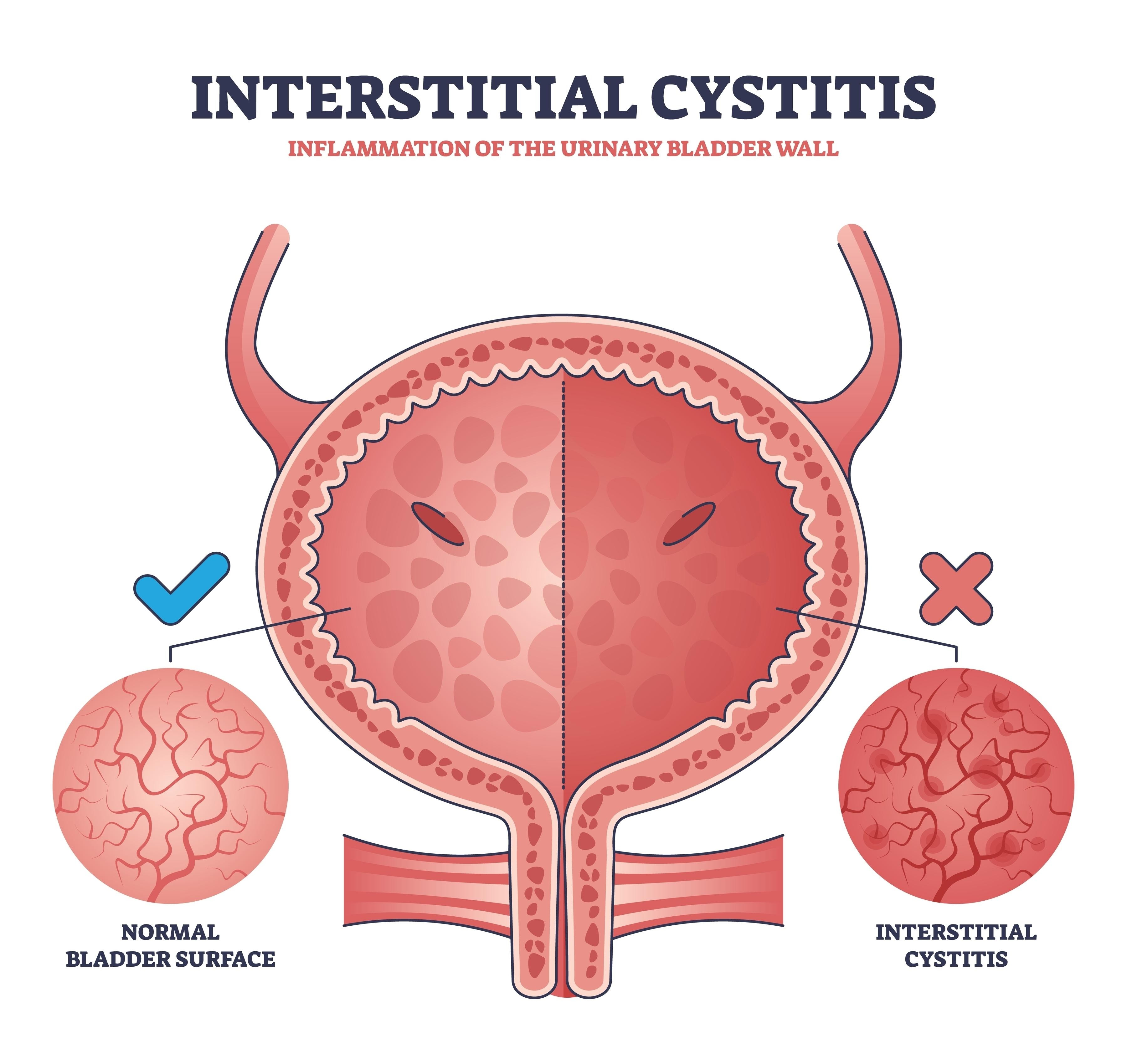
Cystitis is the medical term for inflammation of the bladder, most commonly caused by a bacterial infection. While it is a type of urinary tract infection (UTI), inflammation can also occur due to non-infectious causes like certain medications, radiation therapy, or irritation from hygiene products.
Acute bacterial cystitis causes dysuria, urgency, frequency, and sometimes hematuria; it resolves with antibiotics but recurs in many cases, while interstitial cystitis (IC/BPS) is chronic with pelvic pain and no infection. Risk factors include female anatomy, sexual activity, catheters, and menopause; complications like pyelonephritis can arise if untreated.
Explanation: This is the most common code for a typical sudden-onset bladder infection.
Note: If blood is present in the urine, use N30.01 (Acute cystitis with hematuria).
2. N30.10 - Interstitial cystitis (chronic) without hematuria
Explanation: A chronic, painful bladder syndrome not caused by bacteria.
Note: If blood is present, use N30.11 (Interstitial cystitis with hematuria).
3. N30.40 - Irradiation cystitis without hematuria
Explanation: Used for patients experiencing bladder inflammation as a side effect of radiation therapy (common in prostate or cervical cancer treatment).
greek From Greek kystis (κύστις, “bladder”) + -itis (“inflammation”), first used in 1774. Interstitialcystitis traces to 1808 descriptions by Philip Syng Physick of bladder inflammation without stones.
 Crystal's Coder Hub